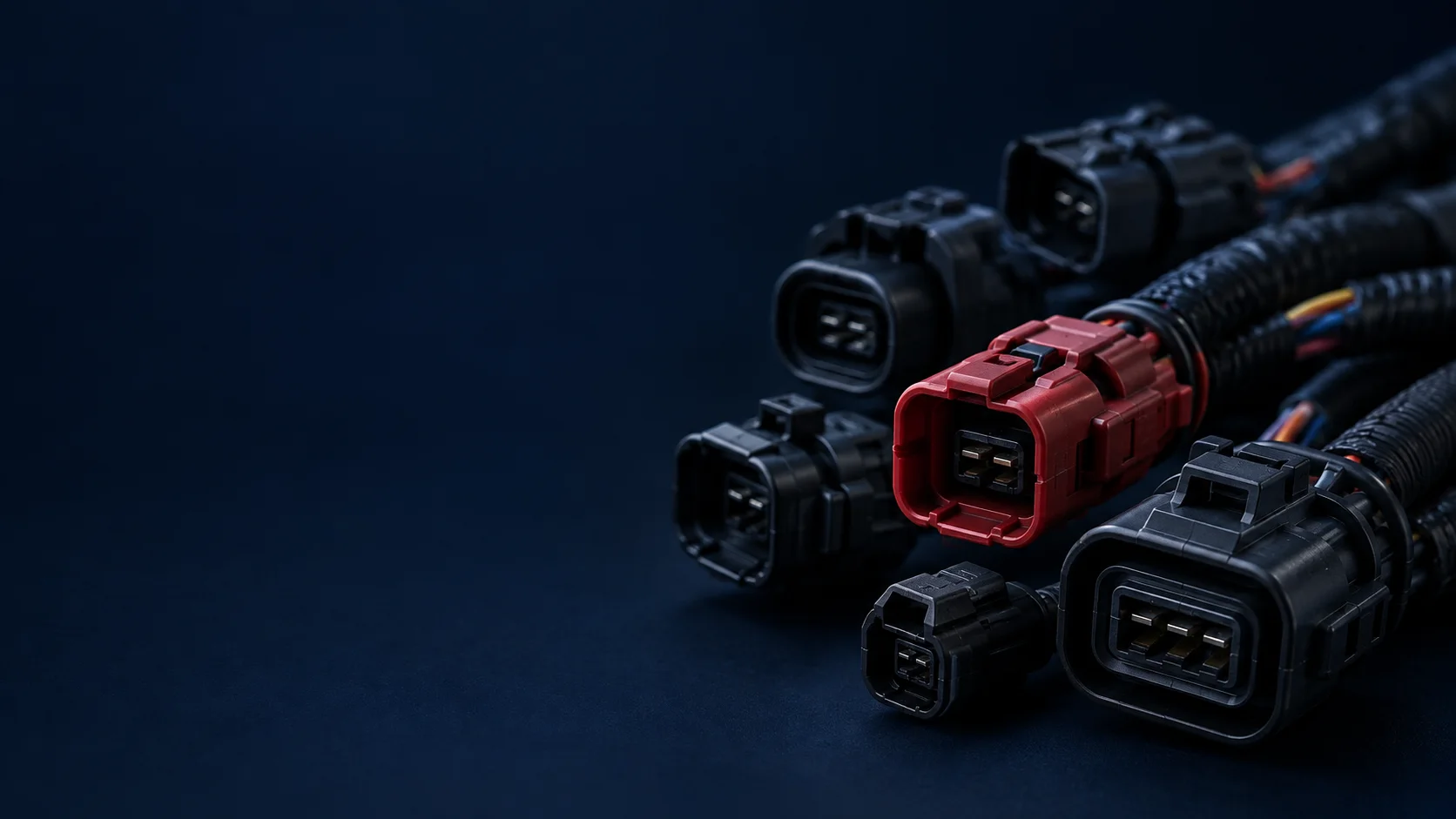
In a wire harness, the way a wire meets its terminal — crimped or soldered — decides how long the joint survives heat, vibration, and handling. The short answer is that a crimp is the default for harness terminations and solder is the exception: a properly made crimp is fast, repeatable, and holds up better under vibration, while solder makes a strong electrical joint but stiffens the wire and can crack where it flexes. This guide explains how each works, compares them on the things that matter, shows what IPC/WHMA-A-620 expects, and gives a clear rule for choosing.
It is written for engineers and buyers who need to specify or review a termination method without over-thinking it. Both methods make a good electrical connection; the difference is mechanical reliability, repeatability, and cost at production volume.
What a crimp is
A crimp is a mechanical cold weld. A tool presses the terminal barrel around the stripped conductor with controlled force, deforming both until the metal-to-metal contact is gas-tight — no air reaches the interface, so it does not corrode. Done to spec, a crimp is as good electrically as a solder joint and better mechanically. Its quality depends on three things: the right terminal for the wire, the correct die and crimp height, and verification by pull-force testing. Our crimping capability page covers the tooling and process controls behind a repeatable crimp.
What soldering is
Soldering makes a metallurgical joint: molten solder wets the conductor and terminal and, when it cools, bonds them. The electrical joint is excellent. The problem is mechanical. Solder wicks up between the wire strands and turns a short length of flexible stranded wire into a solid, rigid rod. Right where that rigid section ends, the wire flexes — and that spot becomes a stress riser that fatigues and cracks under vibration or repeated bending. Heat from soldering can also damage insulation, and the process is slower and more operator-dependent. See our soldering capability page for where we do use it and how we control it.
Crimp vs solder, head to head
The two methods separate cleanly on the factors that decide harness reliability:
- Vibration and flex life: crimp wins. The crimp keeps the wire flexible right up to the barrel; solder creates a rigid-to-flexible transition that fatigues. This is why automotive and industrial harnesses are almost entirely crimped.
- Repeatability: crimp wins. A calibrated crimp tool applies the same force every time and the result is measurable (crimp height, pull force). A hand-solder joint depends on operator skill and is harder to verify.
- Speed and cost at volume: crimp wins. Automated crimping is fast and consistent; hand soldering is slow and labour-intensive.
- Heat damage: crimp wins. Crimping is a cold process; soldering can scorch insulation or damage heat-sensitive parts if not controlled.
- Rework: mixed. A bad crimp is cut off and re-terminated; a solder joint can sometimes be reflowed, but reworked solder joints are easy to get wrong.
- Where solder still helps: joints a crimp cannot make — some coaxial and RF terminations, certain PCB-mounted pins, and designed-in solder cups — or field repair where no crimp tool is available.
What IPC/WHMA-A-620 expects
IPC/WHMA-A-620, the workmanship standard for cable and wire harness assemblies, covers both crimping and soldering, each with its own acceptance criteria. For crimps it defines conductor and insulation brush, bell-mouth, and pull-force requirements; for solder it defines wetting and limits on how far solder may wick along the strands, because that wicking is exactly what creates the stress riser. In practice, harness terminals are crimped and solder is held to specific, controlled joints. Our walkthrough of IPC/WHMA-A-620 Class 3 explains how the acceptance class raises the bar on both, and how each joint is proven in harness testing (continuity, HiPot, and crimp pull force).
Common termination mistakes
- Soldering a crimp. Adding solder to a crimped terminal does not make it stronger — it wicks into the wire and creates the same rigid stress riser you were avoiding. Choose one method per joint.
- Soldering stranded wire under a screw terminal. The solder cold-flows under clamp pressure and the connection loosens over time. Use a ferrule (a crimped end) instead.
- Wrong die or crimp height. An under- or over-crimp fails the pull test; the fix is the correct terminal-and-die pairing and a verified crimp height, not more force.
- No verification. A termination is only as good as its check — crimps proven with pull-force sampling, solder joints with visual wetting and wicking limits.
The rule
Crimp by default. Reach for solder only when the joint is designed for it, when a crimp is physically impossible, or for a field repair — and even then, control the heat and the wicking. For everything else in a wire harness, a verified crimp is faster, more repeatable, and more reliable. If you are briefing a supplier, specify the termination method, the terminal-and-wire pairing, the acceptance class, and how the joint will be verified, and read more in our wire harness blog.
Frequently Asked Questions
Is crimping better than soldering for wire harnesses?
For harness terminations, yes. A properly made crimp is gas-tight, keeps the wire flexible up to the terminal, is repeatable, and survives vibration better than solder. Solder makes an excellent electrical joint but stiffens the wire and can crack where it flexes, so it is reserved for joints designed for it.
Why are wire harness terminals crimped instead of soldered?
Because harnesses live in vibration and thermal cycling. A crimp handles both without creating the rigid stress riser that solder wicking causes, and it is faster and more consistent to produce at volume with measurable pull-force verification.
When should I solder instead of crimp?
When the joint is designed for solder (some coaxial or RF terminations, PCB-mounted pins, solder cups), when a crimp is physically impossible, or for a field repair with no crimp tool. Control the iron temperature and limit how far solder wicks up the strands.
Does IPC/WHMA-A-620 allow soldering?
Yes. The standard covers both crimping and soldering with separate acceptance criteria, including wetting requirements and limits on solder wicking for solder joints, and conductor brush, bell-mouth, and pull-force criteria for crimps.
Can I crimp and then solder the same terminal to make it stronger?
No. Adding solder to a crimp wicks into the wire and recreates the rigid stress riser a crimp is meant to avoid, so it makes the joint less reliable, not more. Use one method per termination.