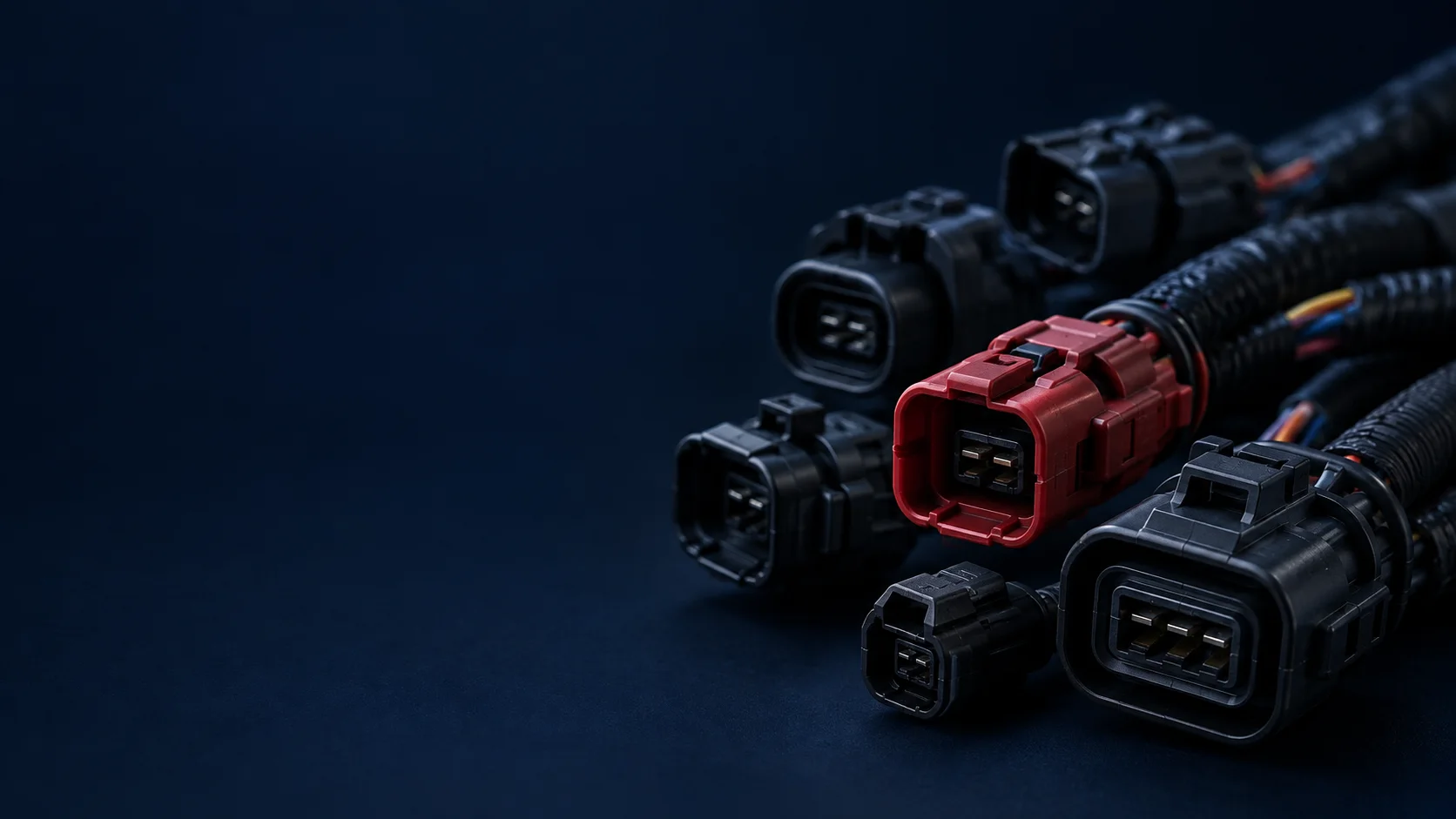
A medical wire harness is built like any other high-reliability harness, then wrapped in extra requirements around materials, cleaning and sterilization, electrical safety, traceability, and change control. The assembly itself is usually specified to a workmanship standard such as IPC/WHMA-A-620 Class 3, but the device manufacturer, not the harness supplier, owns the regulatory compliance of the finished product. A good supplier builds exactly to your drawing, documents every build, and does not change anything without your approval. This guide covers what changes when a harness goes into a medical device, what to put on the drawing, and how to check a supplier's quality claims honestly.
It builds on our earlier articles on IPC/WHMA-A-620 Class 3, harness testing methods and the RFQ package. It is general engineering guidance, not regulatory advice: your device's regulatory pathway decides what is actually required.
What changes when a harness goes into a medical device
| Topic | What medical adds | What to specify |
|---|---|---|
| Workmanship | High-reliability acceptance criteria, usually Class 3 of IPC/WHMA-A-620 | Name the standard and class on the drawing |
| Materials | Jackets and insulation that survive cleaning and, where relevant, skin contact | The compound, color, and any biocompatibility data your device file needs |
| Cleaning and sterilization | Disinfectants, steam, ethylene oxide or gamma can embrittle or discolor some compounds | The exact method and cycles the cable will see |
| Electrical safety | Insulation, creepage and leakage limits set at device level (IEC 60601-1) | Hipot voltage and insulation requirements from your safety design |
| EMC | Emissions and immunity targets (IEC 60601-1-2) | Shielding, ferrite and grounding requirements |
| Traceability | Ability to trace each assembly to its components and build record | Lot, date-code or serial scheme and the record you need back |
| Change control | No silent changes to material, connector or process | An approval requirement for any change or substitution |
Two points deserve emphasis. First, who is responsible for what: the device manufacturer decides which standards and tests apply and carries the regulatory file; the harness supplier is responsible for building to print and for the records that go with each build. Second, specify the use, not just the part. A cable that is only ever inside an enclosure has very different requirements from one that is wiped down daily or touches a patient.
Materials, cleaning and sterilization
Insulation and jacket compounds behave differently under the methods used on medical equipment. Repeated wipe-downs with disinfectants can swell or stiffen some plastics; steam sterilization subjects a cable to heat and moisture; ethylene oxide and gamma radiation can each change the properties of certain compounds. There is no single “medical-safe” jacket, so tell the supplier the method and the number of cycles and choose the compound against that, using the compound manufacturer's data. If any part of the cable can contact skin or the patient, the device maker decides what biocompatibility evidence (commonly assessed under the ISO 10993 series) is required and should supply that requirement in the specification.
Connector choice follows the same logic: the housing, seals and contact plating need to tolerate the cleaning method as well as the electrical load. See our guide to connector selection for the general trade-offs, and overmolded versus potted assemblies if the junction needs to be sealed against fluids.
Electrical safety and EMC are set at device level
For medical electrical equipment, the safety standard family IEC 60601-1 governs insulation, creepage and clearance, and leakage current, and IEC 60601-1-2 governs electromagnetic compatibility. Those limits are designed into the device; the harness has to deliver the insulation system and test voltage the design calls for and keep signal lines quiet. In practice that means three things on the drawing: the hipot test voltage and duration taken from your safety design, the insulation requirements for conductors and sleeving, and the shield termination and grounding method for sensitive signals. Our article on shielding and EMI covers the termination details.
Testing a medical harness
The test plan comes from your drawing and risk analysis, but a typical baseline pairs 100% electrical testing (continuity and isolation, with hipot where the drawing requires it) with sampled mechanical testing such as terminal pull force, and visual inspection to the stated workmanship class. Record the results for each lot so they can be tied back to a build. The reasoning behind each method, and how sampling works, is in the testing methods guide. If the harness will flex in service, add a flex or cycle requirement to the drawing instead of assuming the standard test covers it.
Traceability and change control
Traceability means that for any assembly you can find which lots of wire, connectors and terminals went into it, who built it and when, and what the test result was. Decide up front what you need: a lot or date code on the label, a serial number per assembly, or a full build record per lot. Change control means the supplier does not alter a material, a connector, a crimp tool or a process step without your written approval, which includes substitutions during a shortage. How to handle that without stopping the line is covered in our guide to connector shortages and approved alternates: agree the approved alternates before you need them.
Checking a supplier's quality claims honestly
A medical program often asks for a supplier quality evaluation before any purchase order, and many buyers look for ISO 13485, the quality-management standard for medical devices. Two practical points. A supplier's ISO 13485 certificate covers that organization's quality system within its stated scope; it does not make your device compliant and it does not transfer to a different company. So when anyone shows you a certificate, ask which legal entity holds it, what the scope says, and whether it is currently valid, and ask for a copy.
For transparency about our own position: XUDONG Philippines operates to ISO 9001 quality-system practices and IPC/WHMA-A-620 workmanship, and the certificates that exist are held by our China manufacturing partner, as listed on our certifications page. If your program requires a supplier certified to ISO 13485 specifically, confirm the certificate holder and its scope in writing before awarding work, so there is no ambiguity about which entity is covered. You can read how we describe the arrangement in how to qualify an offshore wire harness supplier.
Representative project (anonymized)
A US medical-device design and development company needed a package of roughly 19 custom medical cable and harness assemblies at quantities of 10, 25 and 100 units. Before any purchase order, it required a formal supplier evaluation: a multi-section questionnaire with signed quality sections and supporting documentation. Our CLOOM engineering base completed every section, returned the signed quality documentation, and supplied BOM-level quotations for all 19 assemblies with alternative-material options clearly flagged, so the buyer could see what each choice changed. The supplier evaluation was passed and the quotations were accepted as the basis for the initial purchase package. (Representative, anonymized; details generalized.) The lesson for buyers is that qualification paperwork and line-item quotes are part of the work: a supplier that answers them completely is easier to qualify than one that sends a headline price.
What to put on a medical harness drawing and RFQ
- Workmanship standard and class (for example IPC/WHMA-A-620 Class 3) and any customer-specific acceptance criteria.
- Use environment: inside an enclosure, wiped down, sterilized (which method, how many cycles), or in contact with skin.
- Materials: wire, jacket, connector housing and plating, with the exact part numbers and any biocompatibility or compliance data you need back.
- Electrical requirements: hipot voltage and duration, insulation requirements, and shield termination and grounding.
- Test plan: what is tested 100%, what is sampled, and the record you want per lot.
- Traceability scheme: label content, lot or serial numbering, and how long records are kept.
- Change control: written approval for any change, and the list of approved alternates.
- Quantities and ramp: prototype, pilot and production volumes, so the supplier can plan the build and the first article.
Send these with your drawing through our drawing-driven quote so the first reply is a real quote. For the supplier side, see our wire harness manufacturing in the Philippines and specialty cable pages, and the manufacturing capabilities overview. This article does not cover implantable or life-support assemblies, which need a dedicated qualification discussion before any quote.
FAQ
Does a medical wire harness need an ISO 13485 supplier?
It depends on your regulatory pathway and your own quality system or customer requirements, so the device manufacturer should decide and state it in the specification. If it is required, confirm which legal entity holds the certificate, what its scope covers, and that it is valid, and ask for a copy before awarding work.
Is IPC/WHMA-A-620 Class 3 required for medical harnesses?
The standard is a workmanship specification, and your drawing or customer requirements decide the class. Class 3, the high-reliability class, is commonly chosen where continued performance matters, which includes many medical applications. Put the standard and class on the drawing rather than assuming.
Which jacket material is best for a medical cable?
There is no single best material. It depends on flexibility, cleaning agents, sterilization method and cycles, and any skin contact. Tell the supplier the method and cycle count, choose the compound from the manufacturer's compatibility data, and validate it on your own assembly.
What traceability can a harness supplier provide?
Typical options are a lot or date code on the label, a serial number per assembly, or a build record per lot linking components and test results. Decide which you need before the build, because adding it afterwards is difficult.
Can I order small quantities for a medical prototype?
Prototype and pilot quantities are normal for medical programs. In the project above, the quantities were 10, 25 and 100 units of each assembly. State your volumes in the RFQ so the supplier can quote setup and unit cost for each break.