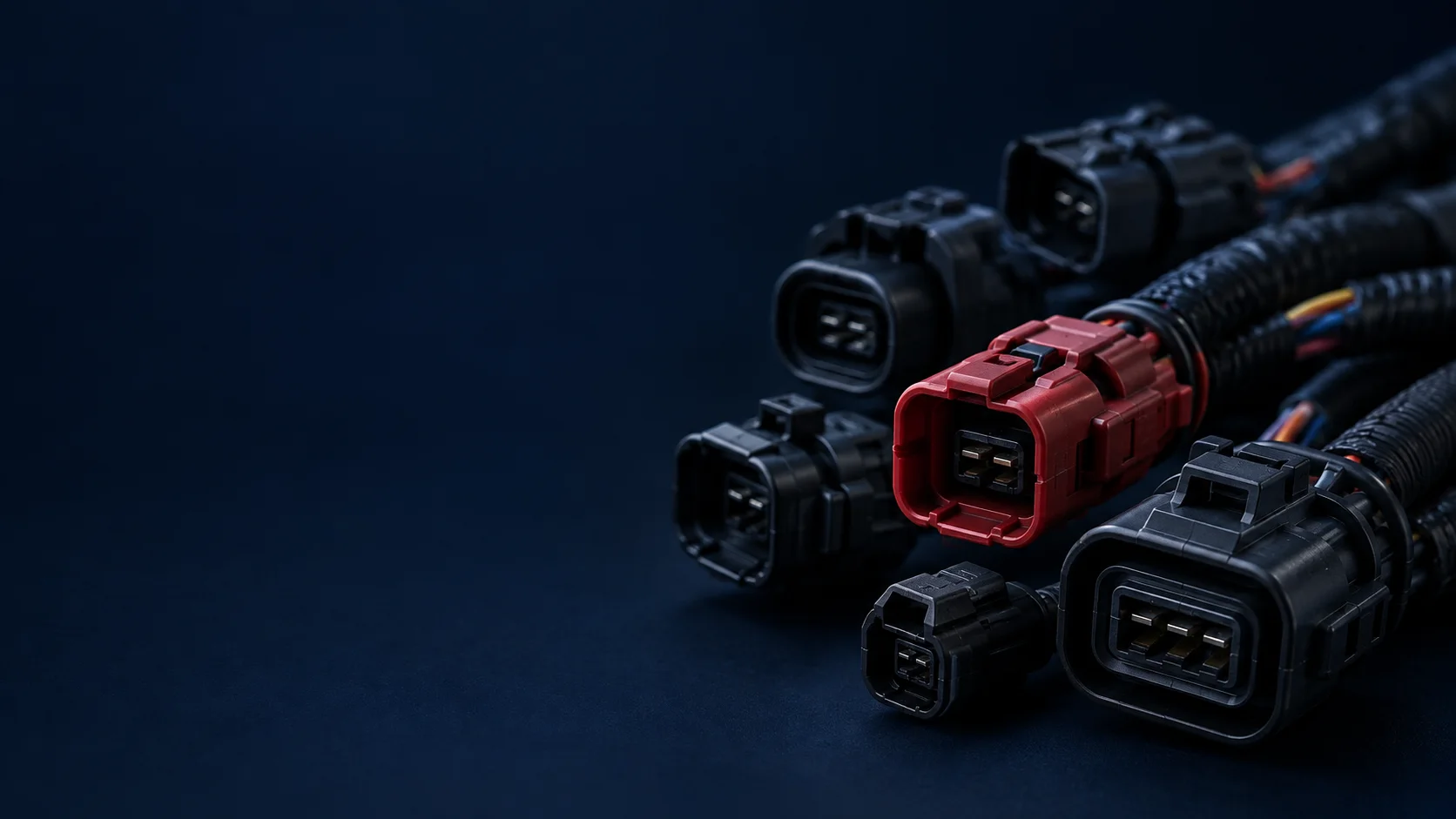
Overmolding and potting both do the same job — seal and mechanically protect the point where a cable meets a connector — but they get there in different ways, and the right one depends mostly on your volume, your sealing target, and how the part has to be built. Overmolding shots a boot, strain relief, or seal directly over the termination inside a mold, giving a clean, repeatable, sealed part that scales well but needs tooling and volume to pay for itself. Potting fills a shell, backshell, or cavity with a curable resin that cures around the termination, needs no hard tooling, and handles low volume and awkward geometry while giving excellent shock, vibration, and chemical protection. This guide lays out the real trade-offs and a simple rule for choosing.
It is written for engineers and buyers specifying a sealed or ruggedized cable assembly for the first time — enough to brief a supplier, read a quote, and understand where the cost and the lead time really sit. The two methods are not rivals so much as tools for different jobs.
What overmolding is
Overmolding forms a polymer boot over the cable-to-connector junction by placing the termination into a mold and injecting or shooting material — commonly a thermoplastic such as TPU, PVC, or TPE, or liquid silicone rubber (LSR) — around it. The molded material bonds to the cable jacket and the connector body, creating a one-piece strain relief and environmental seal with a finished, professional appearance. Because the geometry is fixed by the mold, every part comes out the same, which is why overmolding is the default for sealed assemblies at volume. The cost and lead time live in the mold tooling and in dialing in the process; once that is done, the per-part cost is low. Our overmolded cable assembly and overmolding capability pages cover the material and boot options in more detail.
What potting is
Potting encapsulates the termination by pouring or dispensing a curable resin — typically epoxy, polyurethane, or silicone — into a shell, backshell, connector cavity, or mold cup, where it cures into a solid, protective mass. There is no hard steel tool: the containing shell or a reusable cup defines the shape, so potting is well suited to low volume, prototypes, and complex or one-off geometries. The cured resin grips the wires and fills every void, which makes potted joints extremely resistant to vibration, shock, moisture, and many chemicals. The trade is that a potted part is heavier, the resin must be matched to the temperature and chemical environment, and cure time and exotherm have to be controlled so the resin does not shrink, crack, or overheat sensitive parts.
Overmolded vs potted: the real trade-offs
Both methods can reach high ingress protection (for example IP67 or IP68) when they are designed and processed correctly — sealing is not what separates them. The practical differences are these:
- Tooling and setup. Overmolding needs a dedicated mold per geometry; potting needs only a shell or a reusable cup. That single fact drives most of the volume decision.
- Volume and unit cost. Overmolding amortizes its tooling over a production run, so it wins at volume; potting has little setup cost but more hands-on labor per part, so it wins at low volume.
- Geometry. Potting handles irregular, densely packed, or one-off shapes that would be hard to mold; overmolding suits a repeatable, moldable form.
- Weight and size. Overmolded boots are typically lighter and more compact; a potted mass adds weight and bulk.
- Repairability. Neither is field-repairable — both fully encapsulate the termination, so a failed joint is replaced, not opened. This is worth stating in the specification so no one expects to rework a sealed part.
- Appearance and consistency. Overmolding gives a uniform, finished look part to part; potting can vary more with hand processing.
Prototyping and low volume: silicone soft-molds
There is a useful middle path for prototypes and early low-volume runs: a silicone (RTV) soft-mold. Instead of cutting a hard steel tool, a flexible silicone mold is cast from a master, then used to form an overmold-like boot in small quantities. It bridges the two methods — you get a molded shape closer to a production overmold without committing to hard tooling before the design is proven. It is a bridging technique, not a production process: silicone soft-molds wear and the cycle is slower, so once volume and geometry are confirmed, a hard tool takes over. Used this way, soft-molding lets a design be validated physically before the tooling spend, which is exactly when most sealing and strain-relief problems surface.
When to choose which
A simple rule covers most cases: choose overmolding when the volume is high enough to amortize a mold and the geometry is repeatable; choose potting when the volume is low, the geometry is complex or one-off, or the part must survive heavy vibration and chemical exposure. For a program that starts as a prototype and scales, it is common to prototype with potting or a silicone soft-mold, then move to a hard-tooled overmold once the design and volume are settled. State the sealing target, the environment, and the expected volume in the RFQ, because those three inputs decide the method more than any preference does.
How the sealed joint is verified
Whichever method is used, the seal and the connection are only real if they are tested. A sealed assembly should carry continuity and, where specified, insulation-resistance or high-voltage checks, plus a pull test on the strain relief and, for a stated ingress rating, the appropriate seal verification. The methods behind those checks are covered in our guide to wire harness testing — continuity, HiPot, and pull force. The point is that overmolding or potting is not the end of the job: the acceptance test is what proves the seal you specified is the seal you got.
Treated this way, the choice is straightforward. Overmolding and potting are not better or worse than each other — they are matched to volume, geometry, and environment. Get those three right in the specification, prototype before you tool, and verify the seal you asked for, and either method will give you a cable assembly that survives the field.