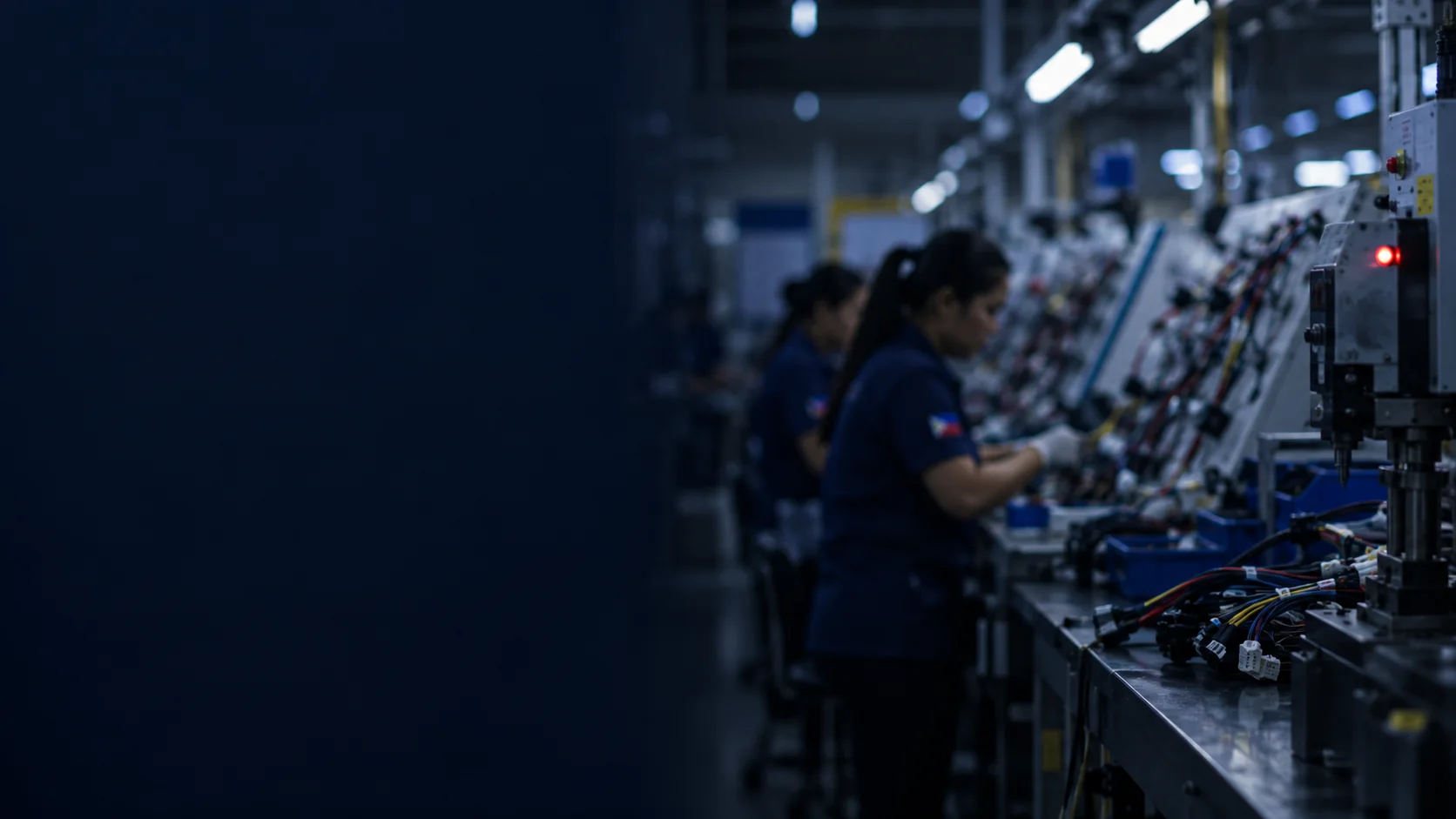
We are building the Philippines into our overseas wire harness manufacturing base for the U.S. market. This is a first-hand account of why — the five reasons behind the location decision, how the China supply chain still feeds it, what it means for tariffs and country-of-origin, and a real customer who made the move.
Five reasons we chose the Philippines
1. A stable trade relationship with the United States. The Philippines has long maintained a solid trade relationship with the U.S. Compared with some other Southeast Asian countries, the risk of a major future trade dispute is relatively low — which supports our long-term plans to serve the American market.
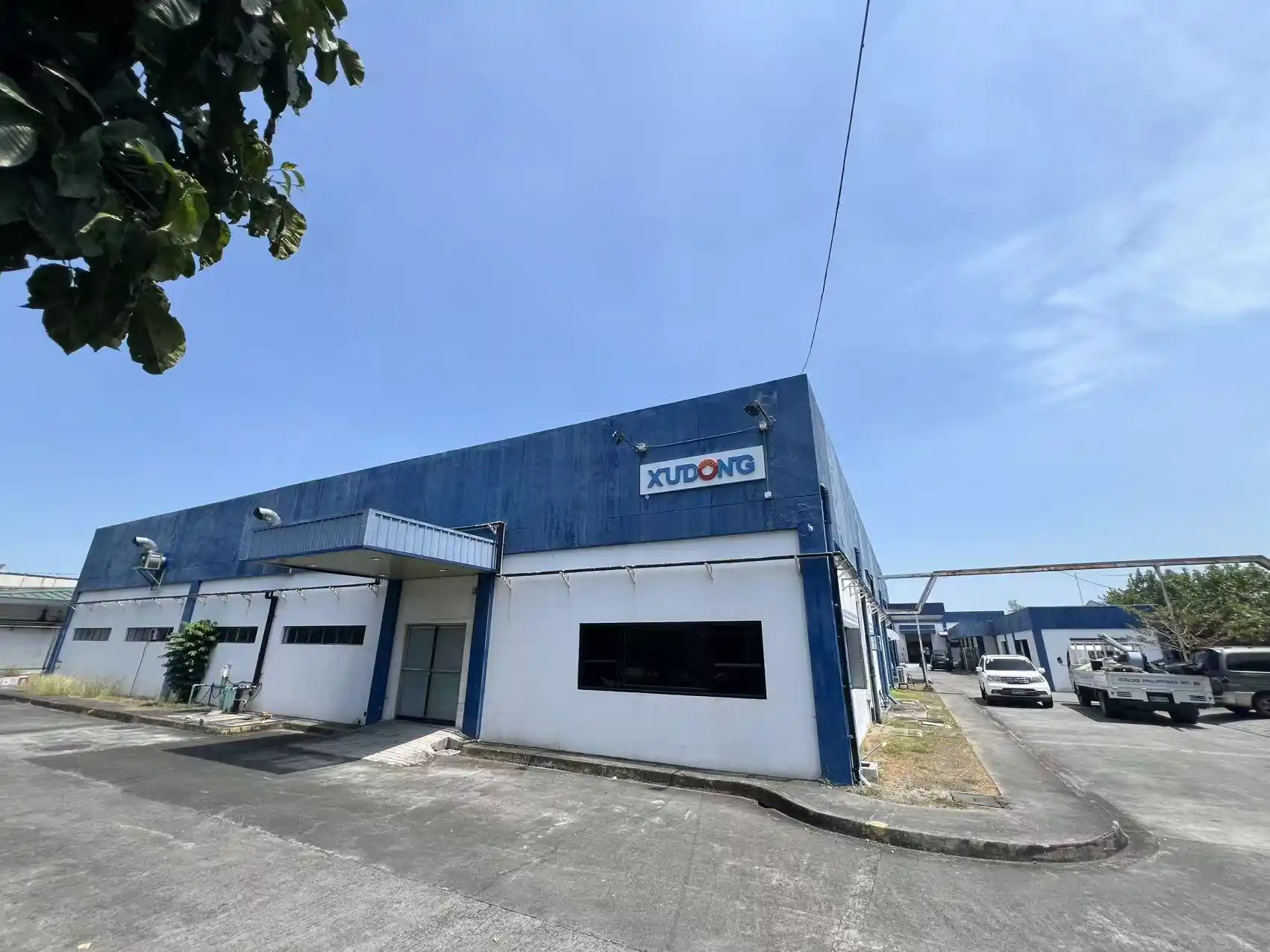
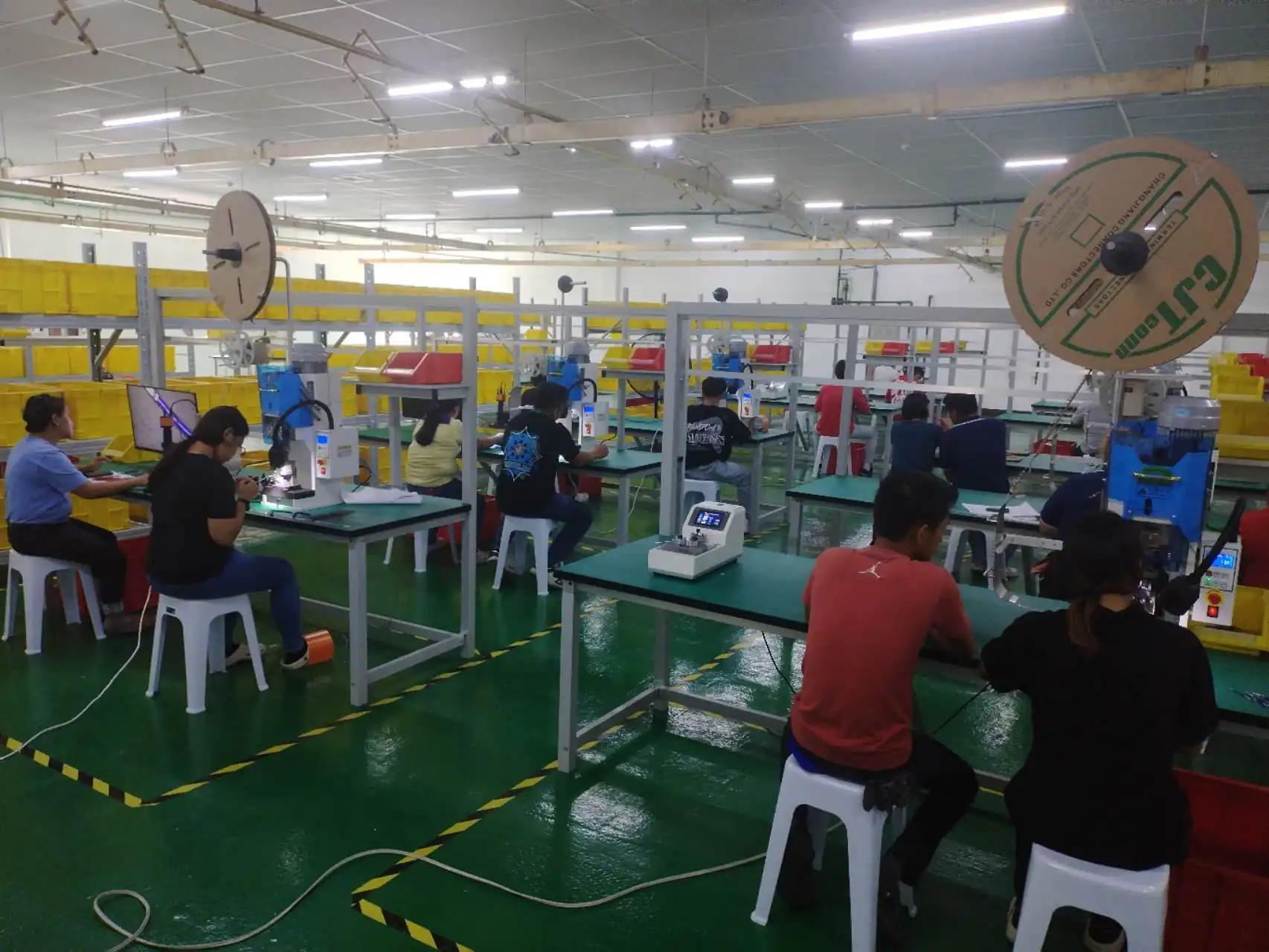
2. Convenient logistics. Our plant sits in the Cavite Economic Zone, within the Greater Manila area. Manila has well-developed international air and sea port infrastructure, so both air and ocean freight are convenient — an advantage for importing raw materials and exporting finished goods.
3. The PEZA special economic zone. The Philippine Economic Zone Authority (PEZA) offers incentives to qualifying export manufacturers, including duty and tax relief on imported raw materials and equipment, along with streamlined import and export support. This helps lower our operating cost.
4. A large, cost-competitive workforce. The Philippines has a large, young labor pool. For a labor-intensive process like wire harness assembly, its labor cost is competitive — and in some cases more favorable than Vietnam.
5. An established local partner. A close partner of mine has run a company in the Philippines for roughly eight to nine years, with mature local operating experience and resources. We established our wire harness operation as a branch built on that existing company — using its management, staff and operating systems to lower our initial investment, reduce the risk of entering an unfamiliar market, and get running faster.
Taken together — trade relations, international logistics, economic-zone incentives, labor, and an existing local base — the Philippines is a strong choice for a wire harness production base, and a particularly good overseas manufacturing base for the U.S. market. It is the same rationale behind our Philippines wire harness capability.
Supply chain and raw-material sourcing
Today, the large majority of our wire harness raw materials still come from the Chinese supply chain. Manufacturing in the Philippines, we keep sourcing primarily from China, shipping materials by sea or air into the PEZA zone. Because the company and its imported materials fall within PEZA's duty-free scope — provided we meet the policy and filing requirements — raw-material imports can qualify for duty and tax relief. The main added cost of cross-border sourcing therefore sits in the China-to-Philippines freight leg.
For long-term, steady orders, we spread out unit freight cost through advance purchasing plans, consolidated buying, and regular ocean shipments. The China-to-Philippines sea route is relatively short, so freight is reasonably economical, and the cost of long-term bulk shipping stays well within control. For ad-hoc orders or urgent shortages, we top up by air to keep production and delivery on schedule. In short, manufacturing in the Philippines does not require rebuilding a full local raw-material supply chain: we continue to rely on China's mature wire harness supply system, combine it with PEZA's import incentives, and control logistics cost through long-term purchasing and ocean shipping. This is the practical shape of a China+1 move for wire harness work.
Cost and country-of-origin
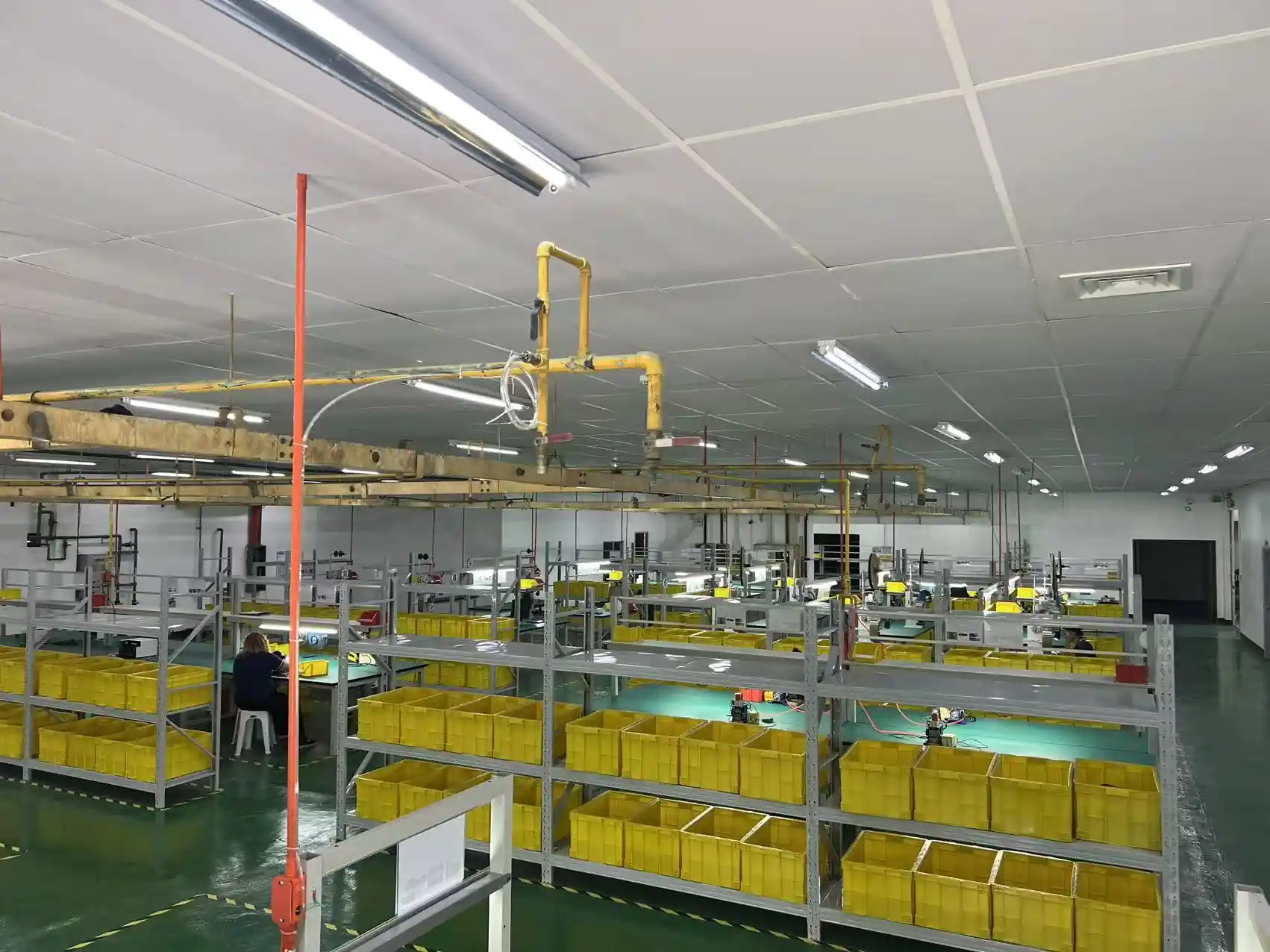
Wire harness assembly is labor-intensive. While importing materials from China adds some freight cost, the Philippines' lower labor cost largely offsets it, so we expect total production cost to be on par with manufacturing in China. Because harness production requires substantial manual work, we expect local value-added in the Philippines to exceed 40% — which helps meet rules-of-origin requirements and obtain a Philippine certificate of origin. So with total production cost roughly unchanged, Philippine-made harnesses exported to the U.S. can qualify for lower tariffs than shipping directly from China, saving U.S. customers meaningful import cost. Our Philippines vs China tariff comparison and the Section 301 workaround go deeper on the mechanics.
A real customer case
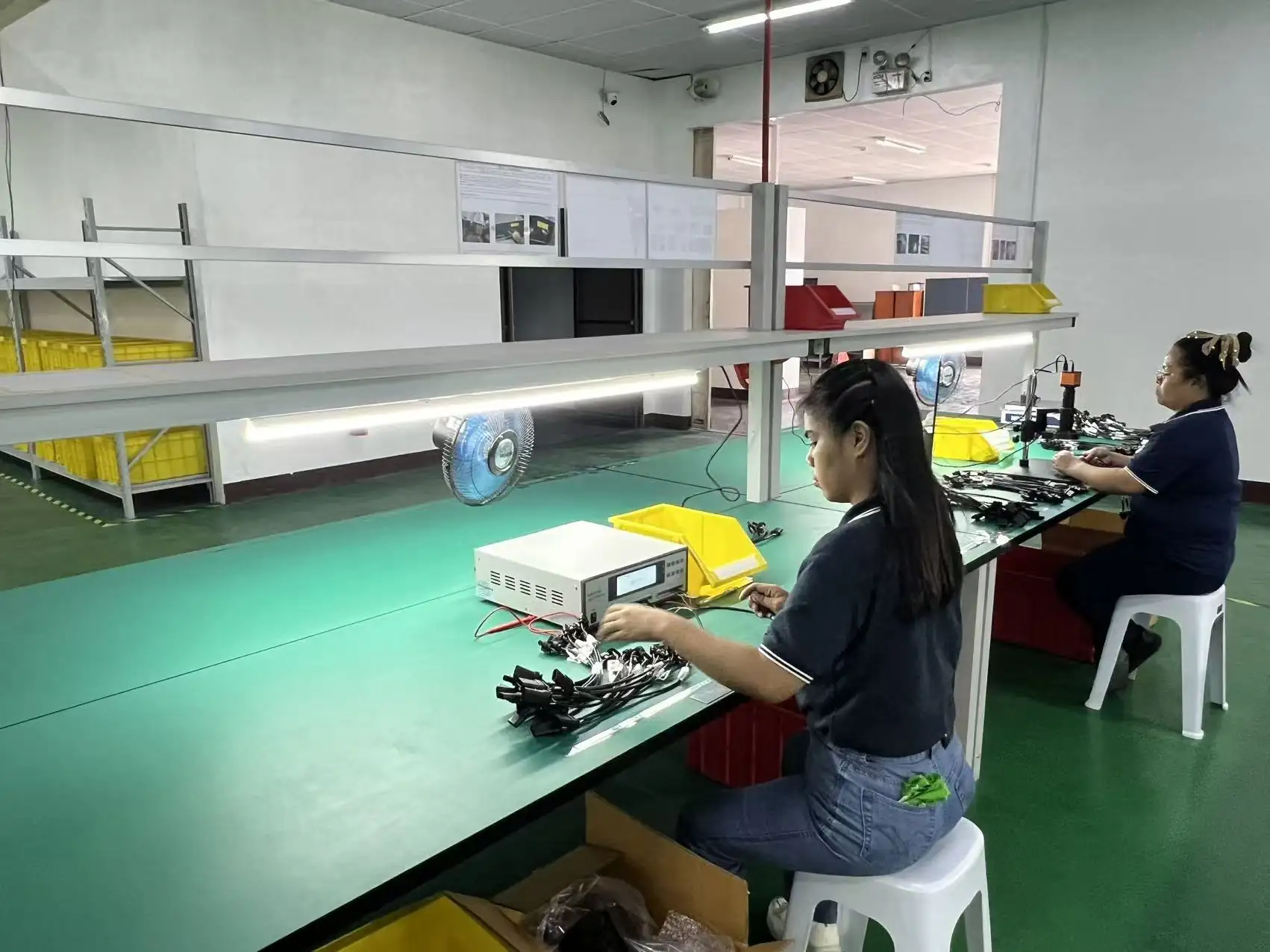
We have a U.S. customer that had always sourced wire harnesses from China but was carrying significant extra cost because of the high U.S. tariffs on Chinese imports. After talking it through, the customer began shifting production to the Philippines through trial orders. Today we quote them exactly the same price as when we produced in China, and product quality is unchanged — but after exporting from the Philippines, their import tariffs are clearly lower. We have not yet tallied the exact savings, but the customer is very happy with the switch, and especially values that our Philippine team delivers the same quality as our China plant while substantially cutting their import cost.
Logistics for small and trial orders
For small batches and trial orders, we typically ship China-sourced materials directly to the PEZA plant by DHL. Thanks to the duty-free policy, customs clearance is efficient, and delivery from China to the Philippine plant normally takes about 4–5 days. Since sourcing and kitting the raw materials in China usually takes around two weeks anyway, the extra 4–5 days of transit has little impact on the overall lead time, and the added logistics cost is limited. More importantly, producing in the Philippines from the sample and trial-order stage lets customers verify our plant's quality, capacity and delivery process up front — laying the groundwork for a smooth transfer of volume orders. Our lead time guide breaks down where the weeks actually go.